

WEIGHT CALCULATOR
Flat bar weight and price calculator
Calculate flat bar and strip weight from width, thickness, length and quantity. A flat bar weight chart for 304, 316L and 6082 follows below.
Material selection
A general estimate for this material. Selecting a grade can provide a more specific density.
Custom density
Dimensions and quantity
Other
Leave empty to calculate weight only. The price is used for this calculation alone; no currency conversion is applied. Request a current price
All dimensions are in millimetres. Decimal points and commas are accepted.
How is the weight calculated?
The section area is multiplied by density to find kg/m. Piece weight uses the entered length; total weight also includes quantity.
width × thickness = section area (mm²)
Area × density / 1000 = kg/m
kg/m × length (mm) / 1000 × quantity = total kg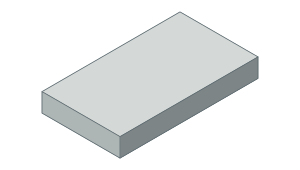
Stainless steels
- Weight per metre
- 3.2 kg/m
- Weight per piece
- 3.2 kg
- Density used
- 8 g/cm³
A theoretical estimate. Actual dimensions, tolerances and material properties can change the measured weight.
Flat bar weight chart
Theoretical weight from nominal dimensions and the typical densities used by the calculator (g/cm³ in brackets). Actual weight varies with size tolerance and grade; use these values for estimates, not for invoicing.
Flat bar weight chartCarbon steel · 304 / 304L · 316L · Aluminium 6082 · kg/m · 20 × 3 – 100 × 20 mm
| Width × thickness (mm) | Carbon steel (7.85) | 304 / 304L (7.90) | 316L (8.00) | Aluminium 6082 (2.70) |
|---|---|---|---|---|
| 20 × 3 | 0.471 | 0.474 | 0.480 | 0.162 |
| 20 × 5 | 0.785 | 0.790 | 0.800 | 0.270 |
| 25 × 5 | 0.981 | 0.988 | 1.000 | 0.338 |
| 30 × 5 | 1.178 | 1.185 | 1.200 | 0.405 |
| 30 × 10 | 2.355 | 2.370 | 2.400 | 0.810 |
| 40 × 5 | 1.570 | 1.580 | 1.600 | 0.540 |
| 40 × 10 | 3.140 | 3.160 | 3.200 | 1.080 |
| 50 × 5 | 1.963 | 1.975 | 2.000 | 0.675 |
| 50 × 10 | 3.925 | 3.950 | 4.000 | 1.350 |
| 60 × 10 | 4.710 | 4.740 | 4.800 | 1.620 |
| 80 × 10 | 6.280 | 6.320 | 6.400 | 2.160 |
| 100 × 10 | 7.850 | 7.900 | 8.000 | 2.700 |
| 100 × 20 | 15.70 | 15.80 | 16.00 | 5.400 |
Worked example
- 40 × 10 mm 304 flat bar, 6 m: 400 mm² × 7.90 ÷ 1000 = 3.16 kg/m; × 6 m = 18.96 kg.
Flat bar weight formula
A flat bar’s cross-section is width × thickness. A 40 × 10 mm carbon steel flat bar weighs 400 mm² × 7.85 ÷ 1000 = 3.14 kg/m, so a 6 m length is 18.84 kg. Doubling either width or thickness doubles the weight.
How flat bar sizes are written
Flat bar is written width × thickness: 40 × 10 means 40 mm wide and 10 mm thick. Strip is thin flat; strip slit from coil uses the same calculation with running metres in place of bar length. Rolled flats can have slightly rounded edges, while strips sheared or laser-cut from plate have sharp edges.
Flat bar weight formula in Excel
Width in A2, thickness in B2, length in C2 (mm), density (g/cm³) in D2:
=A2*B2*D2/1000*C2/1000Flat bar weight by material
For a 40 × 10 mm flat bar the weights per metre are: carbon steel 3.14 kg/m, 304 stainless 3.16 kg/m, 316L 3.20 kg/m, 2205 duplex 3.12 kg/m, 6082 aluminium 1.08 kg/m, Grade 2 titanium 1.80 kg/m.
Strip cut from plate versus rolled flat
A rolled flat and a strip cut from plate of the same width and thickness weigh the same in theory. They differ at the edges and in tolerance: rolled flats have slightly rounded edges and a product-standard thickness tolerance, cut strip has sharp edges and carries the plate’s tolerance. Width × thickness is used for both.
From weight to length: flat bar
To find how many metres you have, divide the total weight by the weight per metre. 40 × 5 mm carbon steel flat bar weighs 1.57 kg/m, so 100 kg is about 63.7 metres and one tonne about 637 metres. This is how stock is estimated by weighing instead of counting lengths; size tolerance can shift the result by a few per cent.
Frequently asked questions
How much does a 40 × 10 flat bar weigh?
3.16 kg/m in 304 stainless; a 6 m length is 18.96 kg.
How much does a 50 × 5 flat bar weigh per metre?
1.98 kg/m in 304 stainless. Flat bar weight is width × thickness × density ÷ 1000.
What is the flat bar weight formula?
kg/m = width × thickness × density ÷ 1000 (mm and g/cm³). For carbon steel, width × thickness × 0.00785 gives kg/m directly.
How much does carbon steel flat bar weigh?
Carbon steel flat bar is 1.18 kg/m at 30 × 5 mm and 3.93 kg/m at 50 × 10 mm.
How is aluminium flat bar weight calculated?
Same formula with 2.70 g/cm³ for 6082: a 40 × 10 mm aluminium flat bar is 1.08 kg/m.
How do I read the flat bar weight chart?
Rows are sizes and columns are materials; the number in brackets in each column heading is the density used (g/cm³). Each cell is the weight of one metre (kg/m). Multiply it by the length in metres for one piece and by the quantity for the total.
How do I calculate flat bar price from weight?
Find the piece weight first, then multiply by the unit price: piece weight × price per kg, or length (m) × price per metre. Enter the price in the calculator’s optional “Unit price” field and choose its unit to see the amount per piece and in total next to the weight; leave it empty to calculate weight only.